Best Flat Irons for Keratin Treatments: Professional Guide
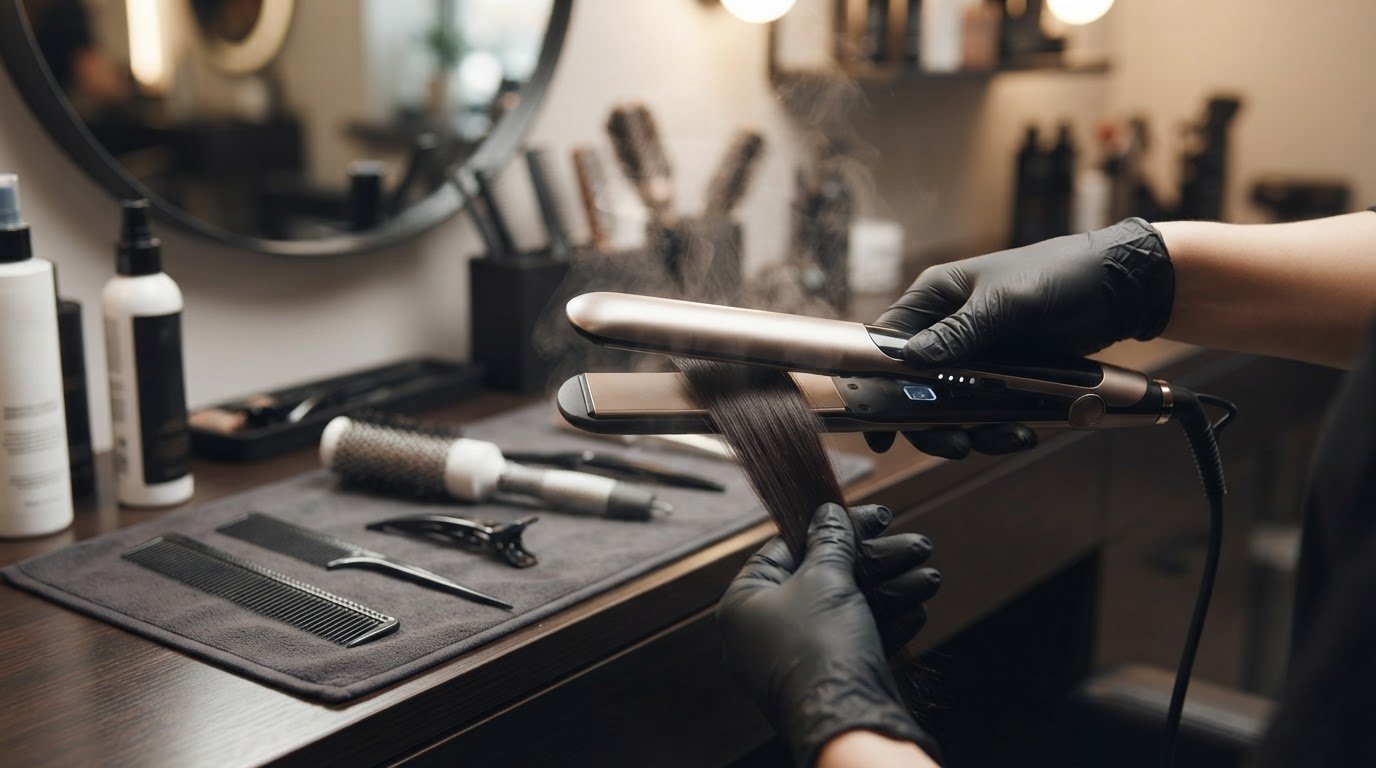
A flat iron’s maximum temperature is not a keratin-treatment setting. Choosing the best flat iron for keratin treatments means matching the tool’s specifications to the service protocol and the client’s hair, rather than simply reaching for the highest heat.
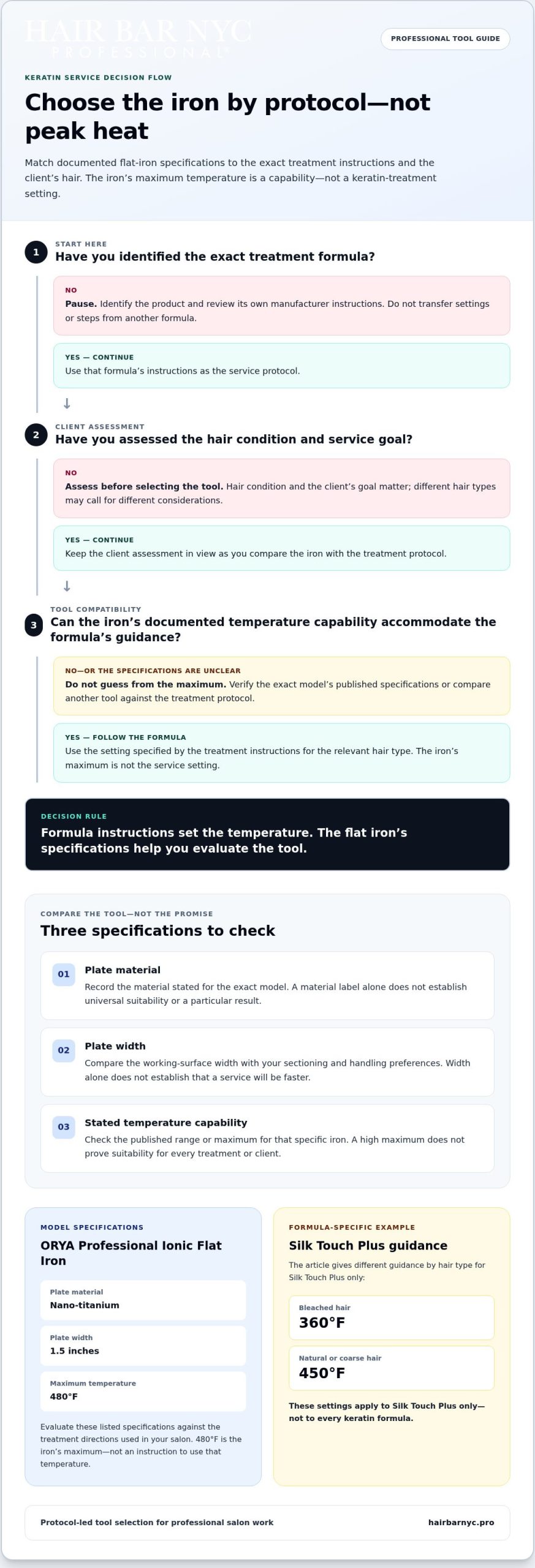
For stylists, plate width and material can help narrow the tool options, but the treatment manufacturer’s instructions determine the temperature to use. Silk Touch Plus, for example, specifies different guidance by hair type, including 360°F for bleached hair and 450°F for natural or coarse hair. Those settings apply to Silk Touch Plus only, not to every keratin formula.
This guide explains how to compare plate material, width, and stated temperature capability. You’ll also see how to assess the ORYA Professional Ionic Flat Iron, listed with 1.5-inch nano-titanium plates and a maximum temperature of 480°F. Use those specifications to evaluate the tool, then follow the instructions for the treatment in use.
Key Takeaways
- Choose a flat iron for keratin services by weighing its listed specifications against the treatment requirements, not by relying on one feature.
- Compare plate materials and widths as practical details. Neither makes one iron suitable for every client or treatment.
- Use a repeatable workflow: identify the formula, read its instructions, assess the client’s hair, then follow the treatment’s specified guidance.
- Evaluate professional tools against your salon’s service mix and stylist preferences to support protocol-led work.
What makes a flat iron suitable for keratin treatments?
A flat iron is suitable for a keratin service when its documented specifications support the treatment manufacturer’s instructions for that formula and client. The best flat iron for keratin treatments is not necessarily the model with the highest heat setting. Consider its stated temperature capability, plate design, and width, then use the treatment instructions to guide the service.
For licensed stylists and salon owners, start with the work performed in the salon. The client’s hair condition, service goal, and selected treatment all matter. Fine, fragile, bleached, color-treated, natural, and coarse hair may call for different considerations. A tool that fits one service or client may not be the right fit for another.
Why keratin services require protocol-led tool selection
Keratin and smoothing systems can have different instructions, including temperature guidance and application procedures. Treat each formula as its own protocol instead of transferring settings or steps from a familiar service. Before beginning, identify the exact product and review its instructions. A client consultation and hair assessment help you apply the relevant guidance to that appointment.
What a flat iron can and cannot tell you
Specifications help you compare tools, but they don’t establish how a particular treatment will perform. Plate material and width describe the iron; a stated temperature range or maximum describes its capability. Neither proves a specific result, faster service, or reduced damage. The treatment instructions determine the setting, not the iron’s maximum temperature.
Flat irons are one part of the broader history of heat-based and chemical hair straightening. For background on these different approaches, see History and methods of hair straightening. In salon practice, the distinction is useful: the treatment formula sets the service protocol, while the iron is the tool used to carry it out.
Before choosing a tool for your station, compare its specifications with the services your team performs. Check whether its stated temperature capability can accommodate the guidance for those treatments, whether the width suits your handling preferences, and whether its listed plate material fits your workflow. Then follow the directions for each service rather than applying one setting to every client.
- Identify the formula. Use the exact treatment instructions, not a protocol remembered from another product.
- Assess the hair. Consider its condition and the client’s service goal before selecting the tool and following the treatment guidance.
- Compare relevant specifications. Review plate material, width, and stated temperature capability.
- Separate capability from direction. A tool’s maximum tells you what it can reach, not what a treatment calls for.
This is the foundation of a professional purchase: choose an iron that supports your protocols, then let the formula’s instructions and the client assessment guide its use.
Which flat-iron specifications matter most for keratin services?
For salon purchasing, compare irons using the same verifiable details: plate material, plate width, stated temperature capability, and the treatment protocols in your service mix. This gives your team a practical shortlist without treating a material label or a high maximum as proof that a tool suits every stylist. The best flat iron for keratin treatments is a considered match for your work, not a category-wide winner.
Plate material and width: compare the specifications, not the hype
Plate material identifies what the manufacturer says the plates are made from. On its own, it doesn’t establish universal suitability or a particular result. Width is a practical detail too: it describes the working surface and can help you assess how the tool fits your sectioning and handling preferences. Compare the listed width with the sections your stylists typically manage instead of assuming that wider plates make a service faster.
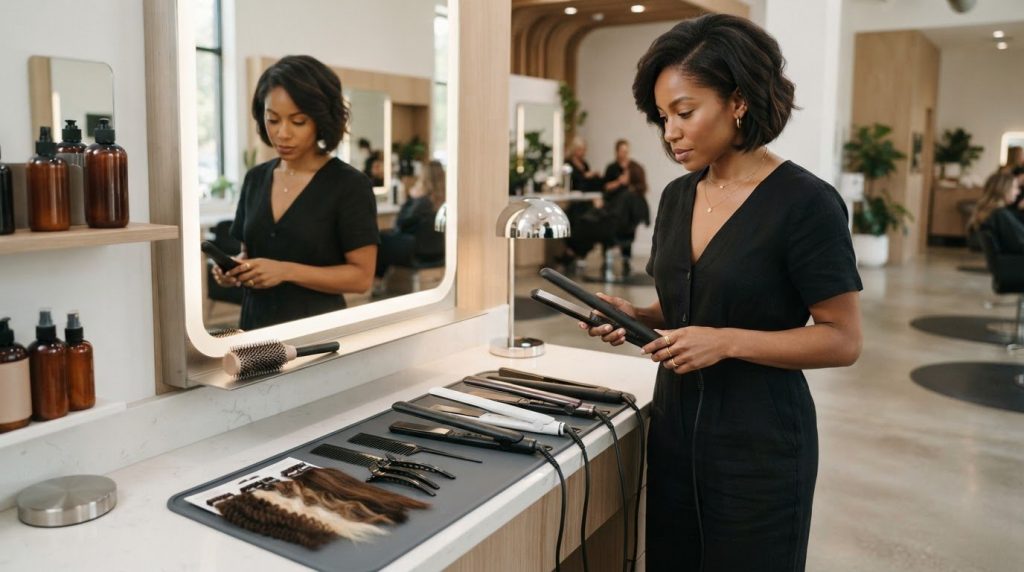
The ORYA Professional Ionic Flat Iron is listed with 1.5-inch nano-titanium plates. Treat those as model-specific specifications. Compare them with the materials and dimensions listed for other irons, then consider which configuration aligns with your team’s technique and service needs.
Temperature range and control: compare usable capability
Record the temperature information published for each exact model. A maximum is one comparison point. A stated adjustable range, when provided, adds context for assessing whether a tool fits your salon’s protocols. Don’t infer a range from the plate material or from another model’s specifications. A high maximum alone doesn’t establish suitability.
A comparison table makes differences easier to review. Keep details blank until you have reliable specifications for the specific iron being assessed.
Iron | Plate material | Width | Stated temperature capability | Protocol compatibility
ORYA Professional Ionic Flat Iron | Nano-titanium | 1.5 inches | Maximum 480°F | Compare with the directions for the treatments used in your salon
Other model under review | Record the listed material | Record the listed width | Record the stated range or maximum | Assess against your service protocols
Use the final column for a salon-specific evaluation, not as a product claim. Consider the formulas in your service menu, the range of client hair conditions your team sees, and whether the tool’s documented capabilities fit those procedures. That’s more useful than ranking irons by plate material alone.
For a consistent purchasing review, have stylists compare the listed width and material with their working preferences, then assess the stated temperature information against the protocols they perform. Keep the assessment tied to confirmed model details. Hair Bar NYC Professional’s professional flat iron options can be evaluated using the same criteria.
Titanium or other plates: how should professionals compare keratin irons?
Compare plate materials using the information attached to each specific model, not a broad claim that one category is automatically better for keratin services. Material helps distinguish products, but it doesn’t establish how a tool will work with every formula or client. A careful comparison records what the manufacturer states and leaves conclusions open until you’ve considered the full service requirements.
How to read titanium and ceramic claims responsibly
“Titanium,” “nano-titanium,” and “ceramic” are product descriptors. Treat them as labels, not as evidence of a particular heat pattern, hair response, or treatment result. If a listing uses terms such as “advanced” or “salon performance,” separate that promotional wording from verifiable specifications. Keep notes tied to the exact model so details from one iron don’t become assumptions about another.
For ORYA, use the specifications recorded in the comparison above. Describe another model as ceramic only when that material is stated for that exact model. If a detail isn’t provided, leave it blank rather than inferring it from the product category.
A practical comparison table for salon buyers
Use this table as a documentation template, not a ranking. The ORYA row refers to its earlier specification entry. Populate details for other models only from their own manufacturer information. A blank cell is more useful than an unsupported assumption.
Iron | Plate material | Width | Stated temperature capability | Specification source
ORYA Professional Ionic Flat Iron | Refer to preceding specifications comparison | Refer to preceding specifications comparison | Refer to preceding specifications comparison | Hair Bar NYC Professional product information, detailed earlier
Other model being evaluated | Enter the exact listed material | Enter the listed width | Enter the stated range or maximum | Record the manufacturer or product documentation
Once the details are recorded, compare like with like. Check that each material and dimension belongs to the model named in that row, and distinguish manufacturer information from retailer descriptions or general category language. This simple record helps salon buyers discuss equipment choices consistently without turning a material preference into a universal rule.
Plate material is only one element in a keratin-service tool decision. Compatibility depends on the complete service protocol and the client’s needs, not the plate label alone. Use the comparison to clarify what is known about each iron, then keep treatment-specific decisions grounded in the relevant formula’s directions.
Salon professionals can use this approach while reviewing professional flat iron options for their workstations.
How should stylists use temperature guidance with a keratin flat iron?
Keep Silk Touch Plus guidance attached to Silk Touch Plus, and follow the separate instructions for every other formula. For a Silk Touch Plus service, identify the treatment, review its directions, assess the client’s hair, and use the setting specified for the relevant hair category. This keeps the service grounded in the right product instructions rather than in settings or procedures carried over from another system.
Apply Silk Touch Plus temperature guidance only to Silk Touch Plus
Silk Touch Plus Formaldehyde-free Keratin Treatment lists these temperature guidelines: fine hair, 360-410°F; bleached hair, 360°F; color-treated hair, 410-450°F; natural or coarse hair, 450°F; and white hair, no higher than 360°F. These figures apply to Silk Touch Plus only.
Use the full treatment instructions alongside your client assessment. If the hair has more than one characteristic, don’t create a new setting by blending categories. Follow the formula’s directions and use professional judgment to identify the applicable guidance for the service.
Keep tool capability separate from treatment instructions
ORYA’s listed maximum is 480°F. For service decisions, focus on the selected treatment’s instructions and the client’s hair, not the tool’s maximum.
A concise pre-service workflow helps keep the relevant information in view:
- Identify the formula. Confirm the exact treatment selected for the appointment.
- Review its instructions. Use that product’s temperature guidance and application directions.
- Assess the client’s hair. Consider its condition and the category addressed by the formula’s instructions.
- Set the iron accordingly. Follow the applicable direction for that product and client, without borrowing another treatment’s settings or procedure.
For salon teams, keeping treatment instructions accessible at the workstation makes protocol checks easier during a busy schedule. A product-specific reference also helps distinguish similar service names and prevents one formula’s guidance from becoming the default for another. Record the treatment used and follow its directions consistently from consultation through application.
Explore Hair Bar NYC Professional flat irons as you assess tools for your treatment protocols.
Is the ORYA Professional Ionic Flat Iron a fit for your salon?
The ORYA Professional Ionic Flat Iron is worth evaluating if its listed specifications align with the treatments your salon performs and the way your stylists work. It has 1.5-inch nano-titanium plates and a maximum temperature of 480°F. Those details are a starting point for a professional buying decision, not proof that the tool is right for every service or client.
Start with your service mix. Review the temperature directions for the formulas used in your salon, then consider whether the iron’s stated maximum can accommodate those instructions. The 480°F maximum describes the tool’s capability; it doesn’t recommend using that setting for a specific keratin treatment. Always select the service setting from the treatment’s own directions.
Next, consider the plate specifications in relation to your team’s workflow. The 1.5-inch width and nano-titanium material are confirmed product details you can compare with other tools. Think about your stylists’ sectioning habits, handling preferences, and the range of services performed. These considerations help you decide whether the listed details fit your salon without assuming an unverified feature or promising a particular outcome.
A protocol-first assessment keeps the decision grounded. Before choosing an iron, weigh:
- Treatment requirements: Do the formulas you use specify temperatures the tool can support?
- Client needs: How will the consultation and the condition of the client’s hair inform the service?
- Stylist preferences: Do the listed plate material and width align with how your team prefers to work?
- Specification clarity: Are you making a decision from stated details rather than assumptions about the tool?
The answers may differ across salons. A team performing a varied mix of smoothing services may prioritize compatibility with the protocols across its formulas. Another salon may place more weight on plate width or material as part of its preferred workflow. Neither approach makes one iron universally best. Choose the tool that fits your salon’s requirements while keeping consultation, hair condition, and formula instructions central to each service.
For licensed professionals and salon owners, the ORYA Professional Ionic Flat Iron offers clearly stated specifications to consider. Treat its maximum as a capability, then follow the directions for the treatment in use. That distinction supports a consistent, protocol-led approach to professional tool selection.
Explore professional styling tools from Hair Bar NYC Professional to consider options for your salon workflow.
Make your next tool choice with intention
Turn your buying criteria into a practical salon decision. Consider the services your team performs, the preferences of the stylists who will use the tool, and how equipment choices fit your approach to client consultation. Reviewing these points helps you select tools that support your salon’s workflow while keeping each service tailored to the client and the treatment selected.
The best flat iron for keratin treatments isn’t a universal pick. It’s a considered choice within a professional routine, where clear product information and careful service planning work together. Keep that standard in view as you refine your stations and build consistency across your team.
Hair Bar NYC Professional provides professional tools for salon professionals and licensed users. Explore professional styling tools and compare options for your salon. Review the product specifications, then choose the tool that aligns with your workflow and treatment protocols.
Frequently Asked Questions
Is a titanium flat iron always the best choice for keratin treatments?
Not automatically. Titanium is one material specification, not a stand-alone measure of suitability for keratin services. For a salon purchase, compare the exact model’s listed material and width with the temperature capability required across your formulas, then consider whether the dimensions fit your stylists’ sectioning preferences. ORYA is listed with nano-titanium plates. Choose a flat iron for keratin treatments based on protocol fit, not the material label alone.
Can I use the same flat iron for different keratin treatment formulas?
One iron may be used across different services if its documented capabilities support each formula’s requirements, but using the same tool doesn’t make the procedures interchangeable. Build a service reference by product name and keep each system’s temperature and application directions separate. Before a repeat visit or formula change, verify which treatment is being used and consult its instructions again. This helps prevent a familiar setting or technique from carrying over by habit.
What temperature should I use for a keratin treatment?
There isn’t one setting for all keratin services. Use the exact treatment’s temperature guidance alongside the client’s hair assessment, and keep the formula name visible in the service record. For Silk Touch Plus only, the guidance is 360-410°F for fine hair, 360°F for bleached hair, 410-450°F for color-treated hair, 450°F for natural or coarse hair, and no higher than 360°F for white hair. These figures don’t apply to other formulas.
Does a 480°F maximum mean an iron should be used at 480°F for keratin?
No. ORYA’s listed 480°F maximum describes the iron’s upper capability, not an instruction for a keratin service. Select the treatment first and follow its own hair-type guidance. For Silk Touch Plus, white hair must not exceed 360°F. Keep that product-specific limit separate from other systems’ directions. A high-capability tool can be evaluated for salon use without treating its maximum as a default setting.
Are wider plates better for professional keratin services?
Not by default. Width is most useful when considered alongside the stylist’s grip, sectioning habits, and the areas being serviced. A 1.5-inch plate provides a measurable point of comparison, but width alone doesn’t establish whether a tool suits a particular treatment or speeds up an appointment. During a salon evaluation, consider handling and section control while keeping the treatment procedure unchanged.
Who should buy professional flat irons from Hair Bar NYC Professional?
Hair Bar NYC Professional serves salon professionals, licensed stylists, and salon owners. ORYA is one option to assess by its listed nano-titanium plate material, 1.5-inch width, and 480°F maximum. Compare those details with your service menu and team preferences. For each appointment, follow the treatment directions and assess the client’s hair before selecting the setting.